
The Tau Zero Foundation
Pioneering
Interstellar Flight
A coalition of researchers, educators, makers, and visionaries who pioneer bridge-building methods, develop solutions, and inspire us all toward interstellar flight.


The future of the human race will be built on our ability to reach additional habitable planets.
The Tau Zero Foundation is dedicated to building the stepping stones that enable humankind to become a permanent, space-faring civilization. Our members are passionate about practical interstellar flight and the adventures we encounter as we all work to achieve it.
Ad astra incrementis.
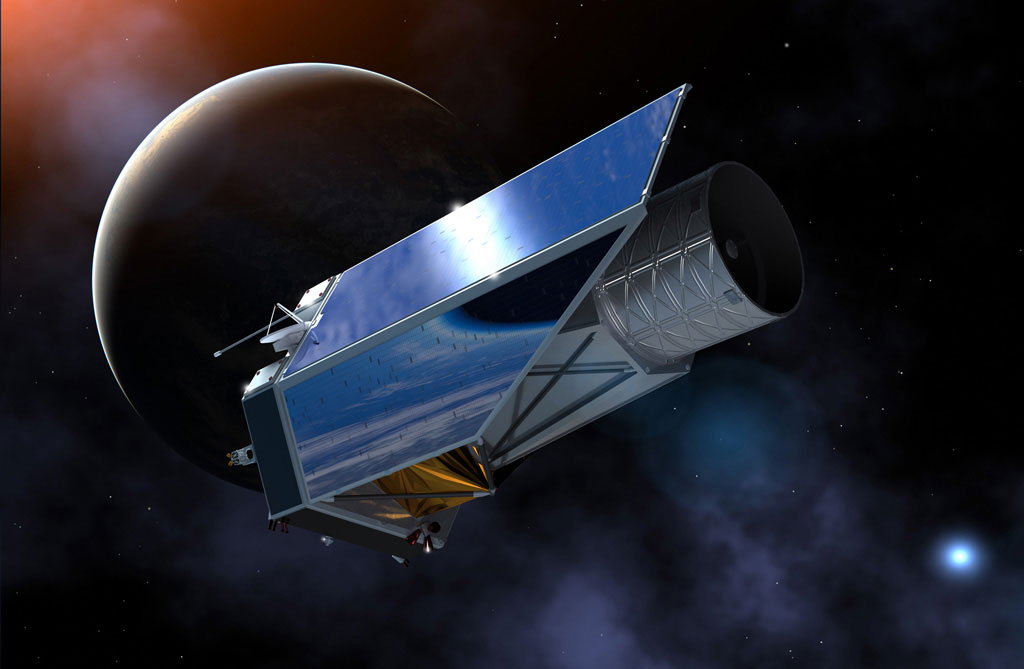
We now live in the Interstellar Era
The Tau Zero Foundation is a nongovernmental organization whose members, participants, and friends are involved in a number of ongoing projects devoted to interstellar flight.
We seek to level the playing field for all who want to contribute to the steps to go from here to there and back again.

Our Mission
The Tau Zero Foundation develops the technologies required for human flight to other star systems within a single lifetime. We see that interstellar flight is possible within physics we know now, and we work to make it practical.
We take an incremental approach, focusing on steps we can take today, to develop breakthrough propulsion physics, improve and lower costs for energy requirements, propulsion technologies for precursor missions, robotic probes and to participate in the near term developments of human space flight capabilities.
What’s out there
President John F. Kennedy, famously stated, “We choose to go to the Moon! We choose to go to the Moon in this decade and do the other things, not because they are easy, but because they are hard; because that goal will serve to organize and measure the best of our energies and skills, because that challenge is one that we are willing to accept, one we are unwilling to postpone, and one we intend to win . . .”
Even before he made this statement, the President claimed, “Space can be explored and mastered.”
This is our mission.
Why pursue starflight now?
- Rekindles hope for a better future, where humanity thrives and opportunities are abundant.
- Compels humanity to conquer frontiers instead of each other.
- Drives progress toward revolutionary advancements, not just the next innovation.
- Provides a dispassionate venue to solve contentious social issues (using context of far-future ‘world ships’), such as population limits, sustainability, governance, life’s purpose, etc.
- Provides a venue for long-range thinking on profoundly important goals before their solutions appear imminent or before the need is dangerously pending.
- Gives students career goals that also benefit humanity.
Ad Astra Incrementis.
‘To the stars, in steps, with each step larger than the last.’
Going to the stars is not likely to be due to a single grand breakthrough, but rather the result of thousands of small, incremental discoveries which build upon each other.
The goal of the Tau Zero Foundation is to encourage and enable those early steps now, so that eventually the human family may complete the work of reaching nearby stars, giving our family the means to grow and thrive beyond Earth.